Multichannel order fulfilment

Every order, from every channel, in one queue

Ordeks pulls your WooCommerce, Erply and Montonio orders into one scan-driven picking and packing workflow — on a warehouse handheld, and it keeps working when the wifi doesn't.

No card to start · from €9 per person · English & Eesti

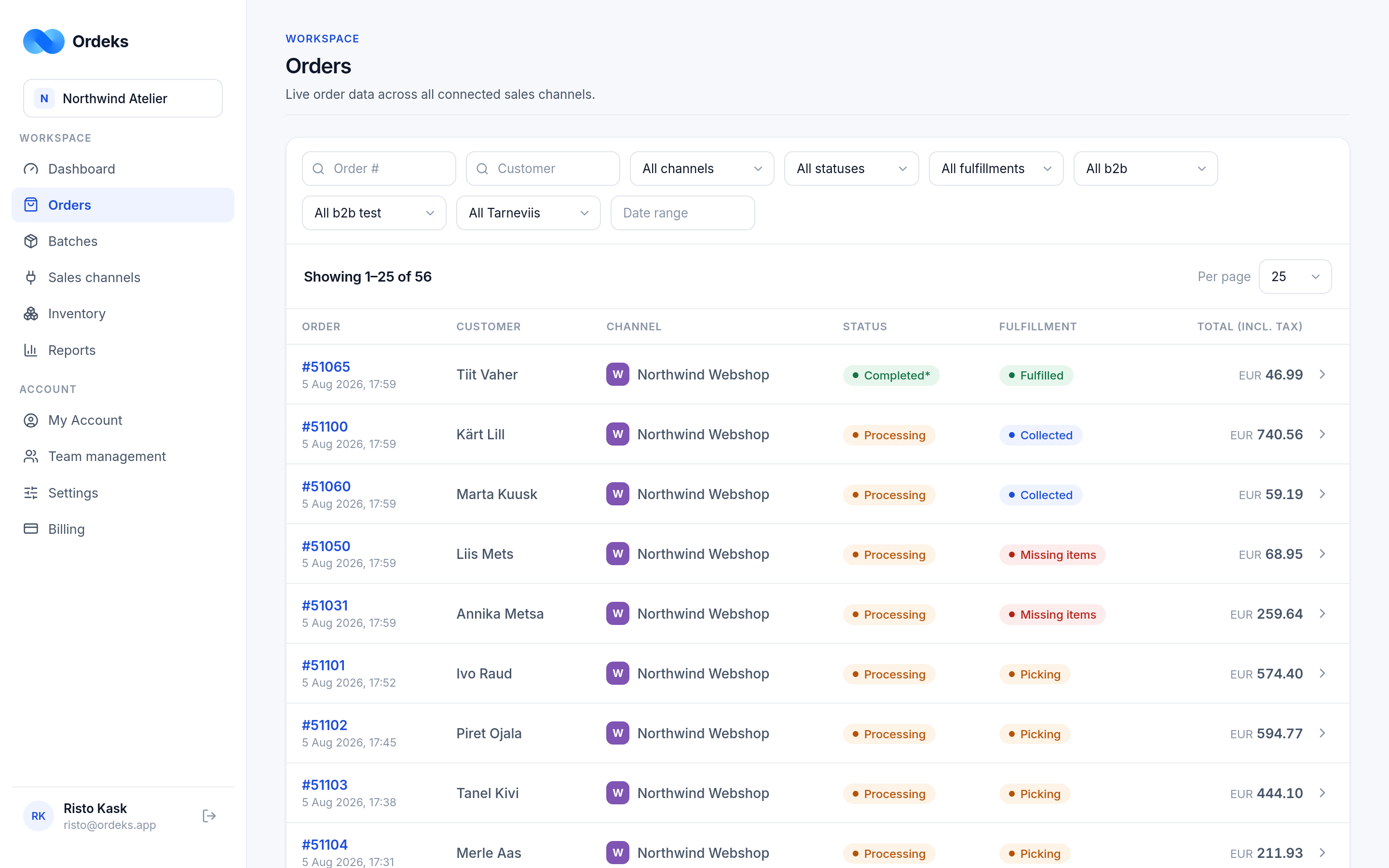
The Ordeks order list on a laptop, showing orders from several sales channels with their fulfilment status.
WooCommerce Erply Montonio Connected today. More channels on the way.

You outgrew the order screen. You'll never run a WMS.

Four tabs and a printed sheet

The shop admin, the ERP, the courier portal, and a picking list someone writes on. Nothing agrees with anything.

The wrong item ships

Nobody verifies the box. The first you hear of it is the return.

Nobody can say how long it takes

You have a feeling about your fulfilment speed. You don't have a number.

Order in, parcel out

1

Connect

Paste your store keys into a wizard. Ordeks tests the connection, sets up webhooks, and shows you a real order from your store mapped into Ordeks fields before you commit.

2

Pick

The handheld names the next product and locks the scan to it. One order, a batch of twenty, or a collector-and-packer split. Every unit verified.

3

Pack

Print the batch's labels in one stack, scan each parcel label to open its order, pack it line by line.

4

Close the loop

The status is written back to your shop with the worker's name on it, and the numbers land in your reports.

One queue, every channel

Connect WooCommerce, Erply and Montonio. Each connection pulls orders in, pushes them out, or both. Every field is mappable — including the custom fields your store invented — and a live preview shows a real order from your shop transformed as you edit. Statuses from every channel map onto one set, so one filter works everywhere.
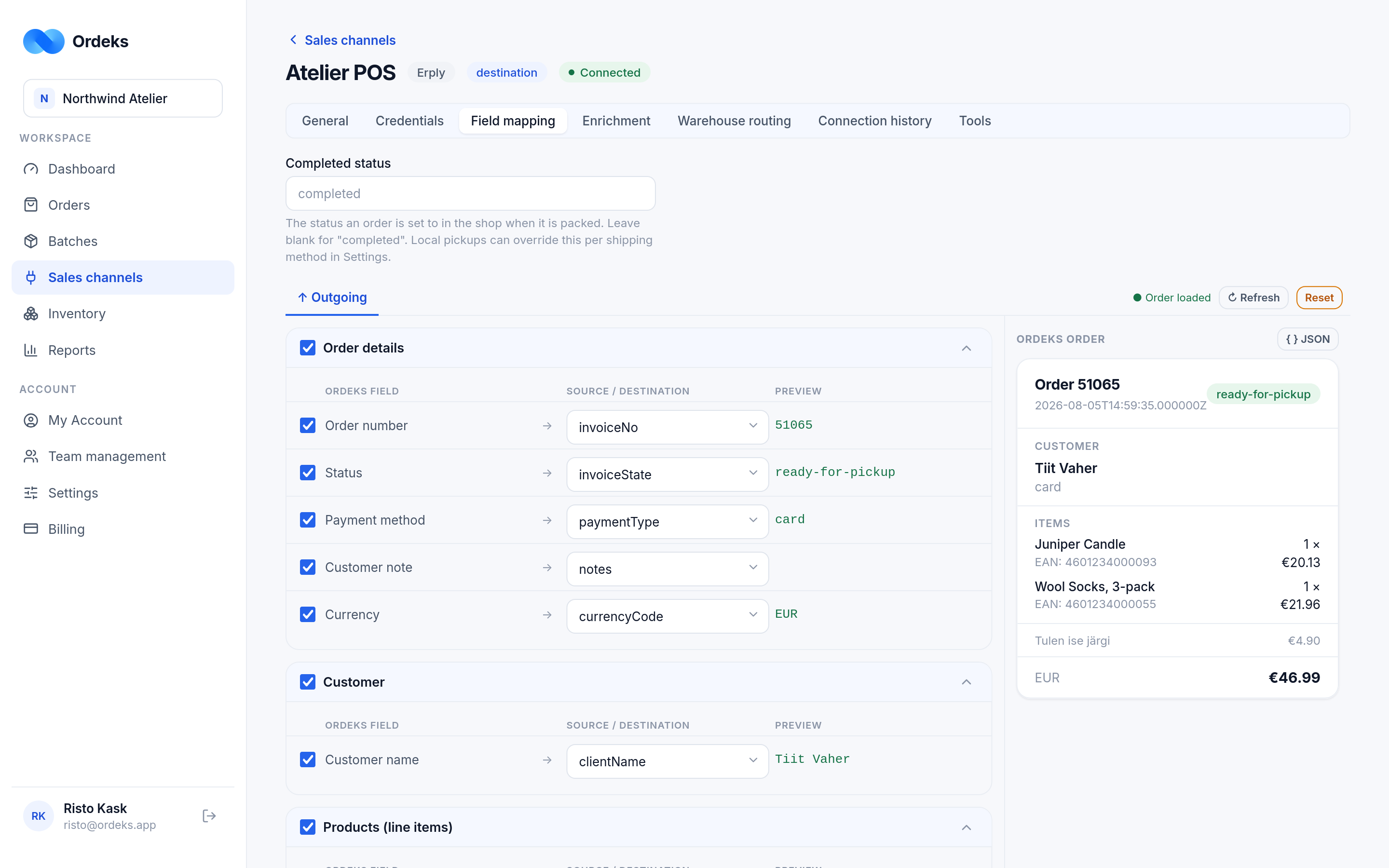
The field mapping editor, with an incoming order from the store on one side and the mapped Ordeks fields on the other.

Scanning that can't go wrong

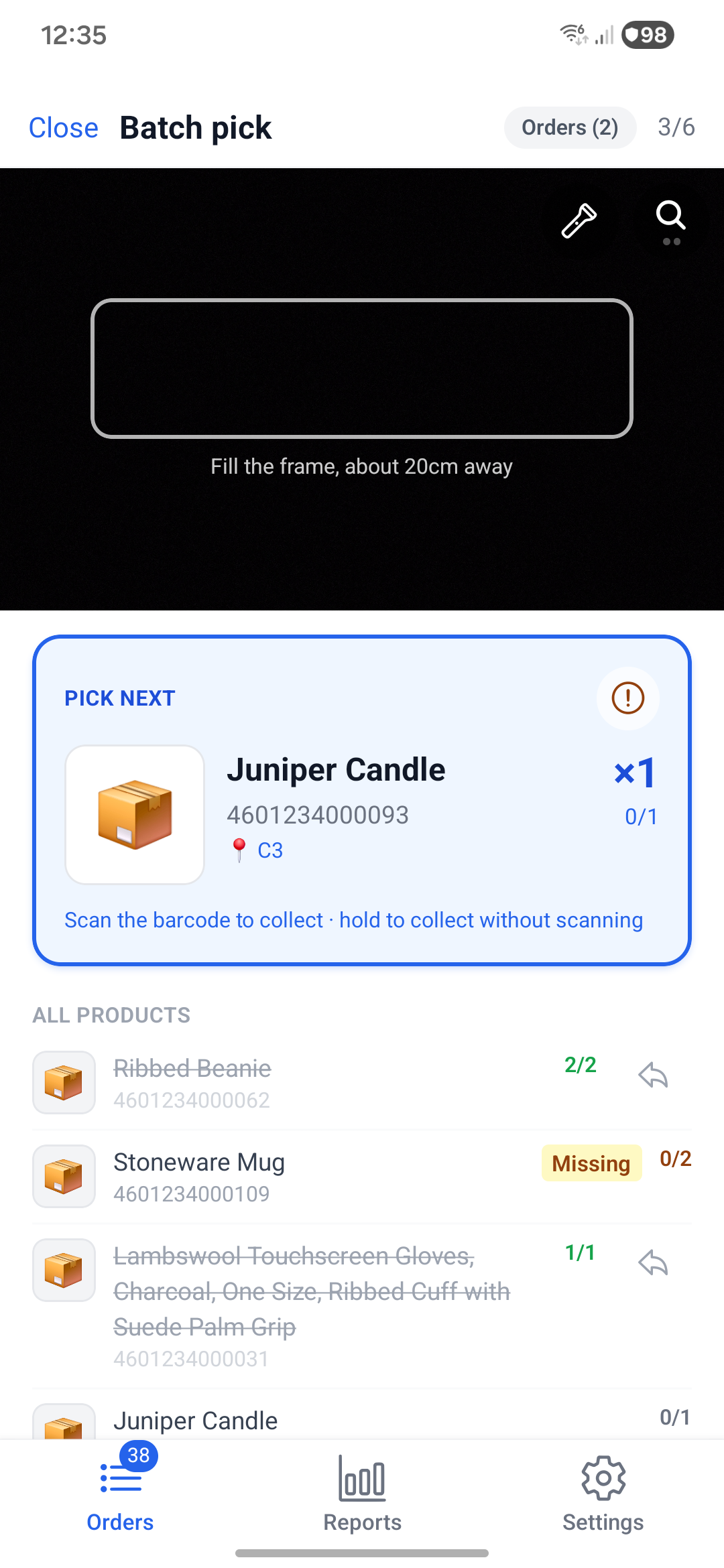
The app names the next product and refuses anything else. Every unit registers individually, with a check and a beep. Undo is one tap. Can't find it? Hold the button, mark it missing, keep walking — the order stays open until it turns up. Runs the hardware scan engine on Zebra handhelds, no camera, no wait between scans.

The mobile picking screen on a handheld, with the next product to collect highlighted and its quantity.

The wifi drops. The scanner doesn't.

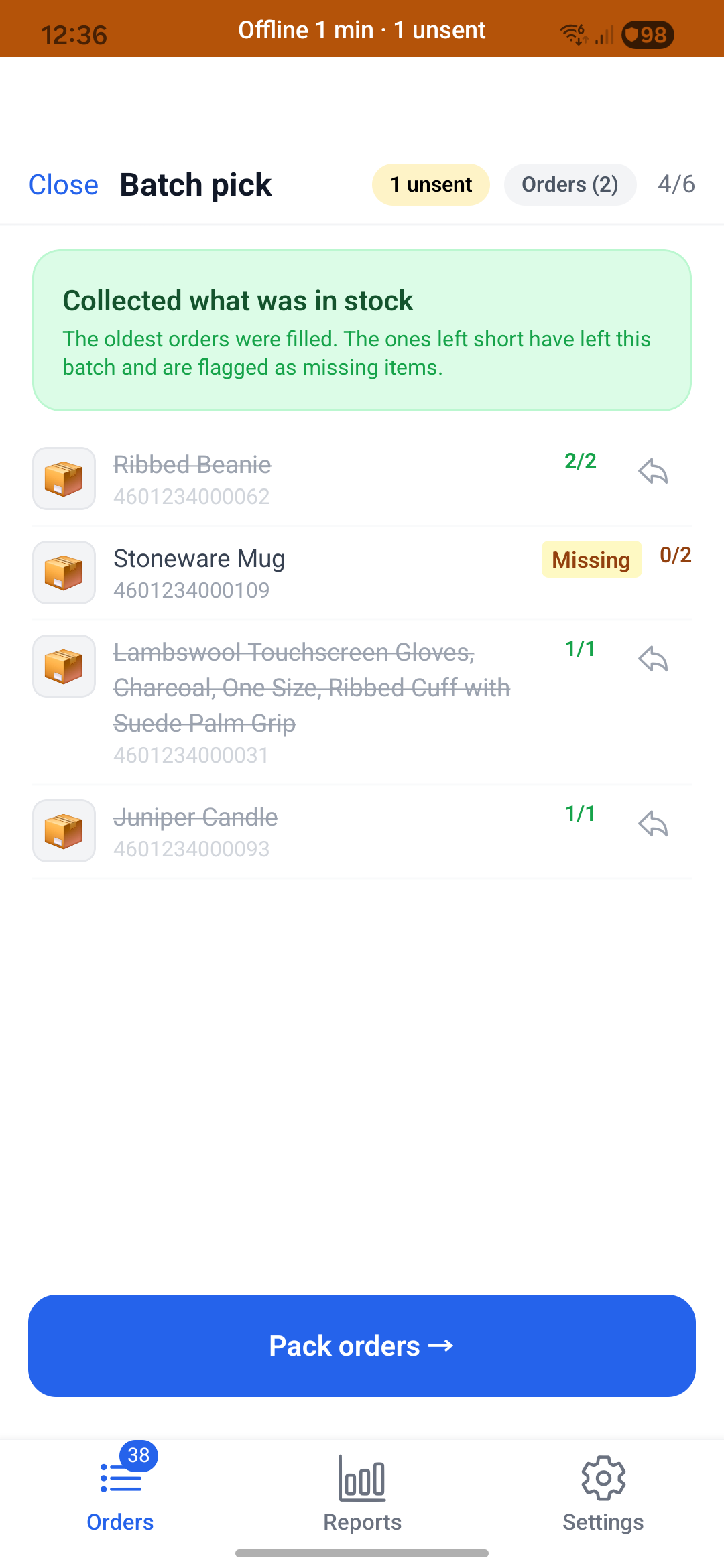
Every scan is queued on the device and replayed in the exact order it happened when the connection returns. Every write is safe to replay, so nothing is ever double-counted. The banner tells you how long you've been offline and how much is unsent — driven by whether your work is actually reaching the server, not by the wifi icon. Anything the server refuses comes back in a list naming the product.

The picking screen with the offline banner reading "Offline 1 min, 2 unsent", and the same count repeated in the header.

A pick list that follows your shelves

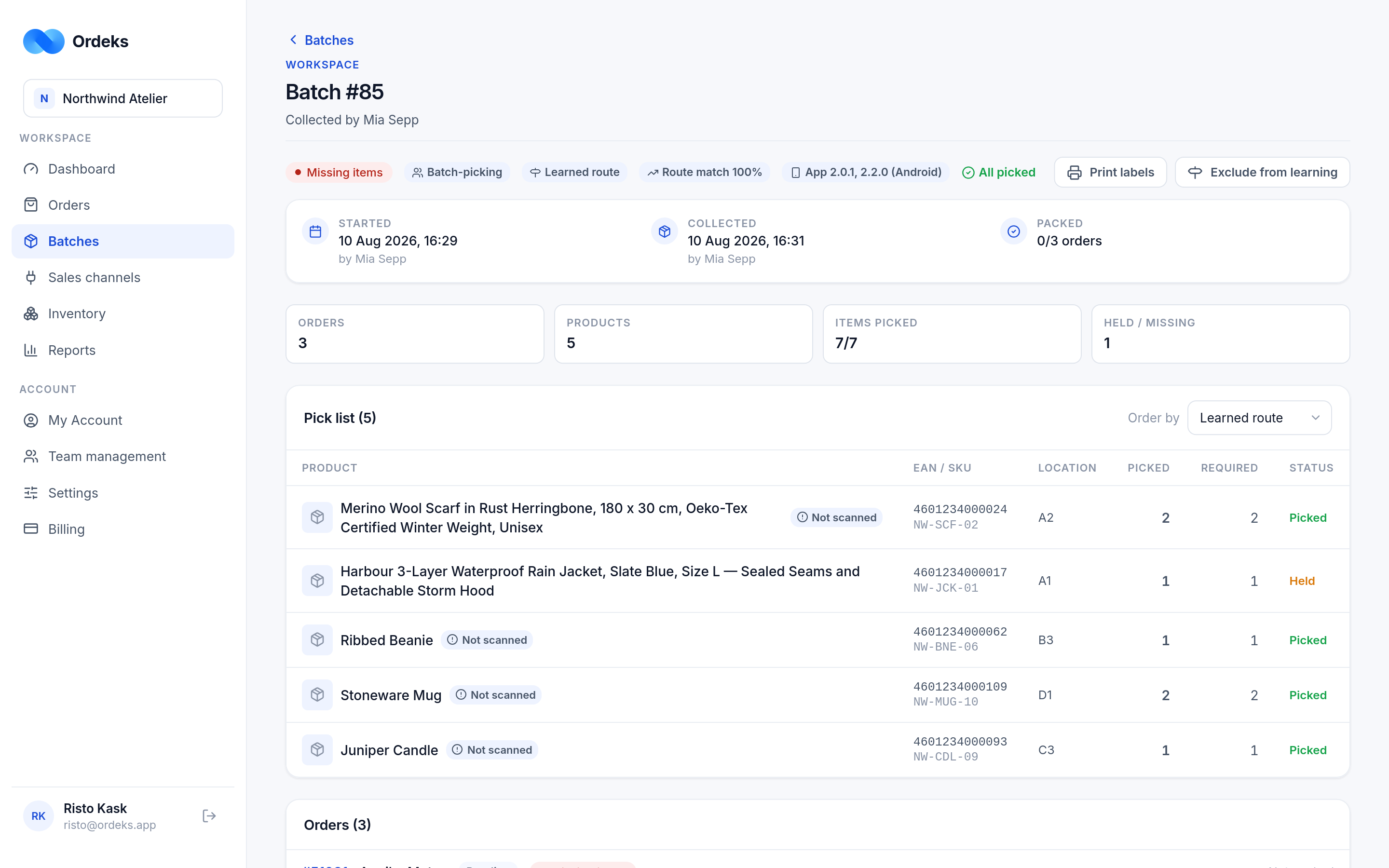
Ordeks learns the route your pickers actually walk and re-sorts the pick list to match — no warehouse mapping, no location fields required. Or drive it from your own warehouse locations if you have them. Every batch reports how closely it followed the route, so you can see who's zig-zagging.

A batch detail page listing the products to pick in route order, with the batch's route match percentage.

Labels, without the courier portal

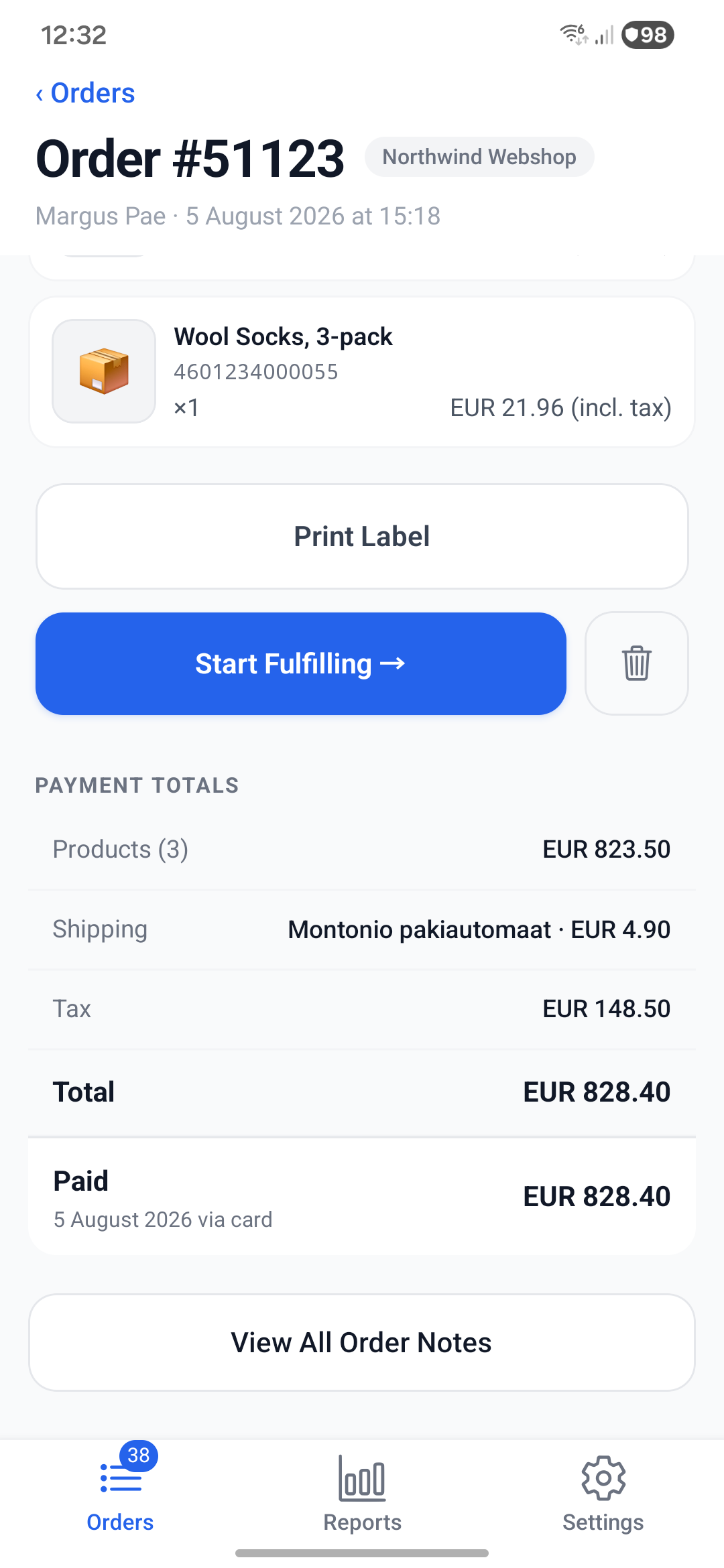
Fetch carrier labels through Montonio and print a whole batch in one stack, ordered by carrier. Print straight to a network label printer — no driver, no desktop. For methods with no carrier label, Ordeks prints its own with a scannable barcode so the workflow doesn't change. If a label goes missing from a run, find it and reprint from the app.

An order on the handheld with a Montonio parcel-machine delivery, showing the button that prints its carrier label.

Finally, numbers

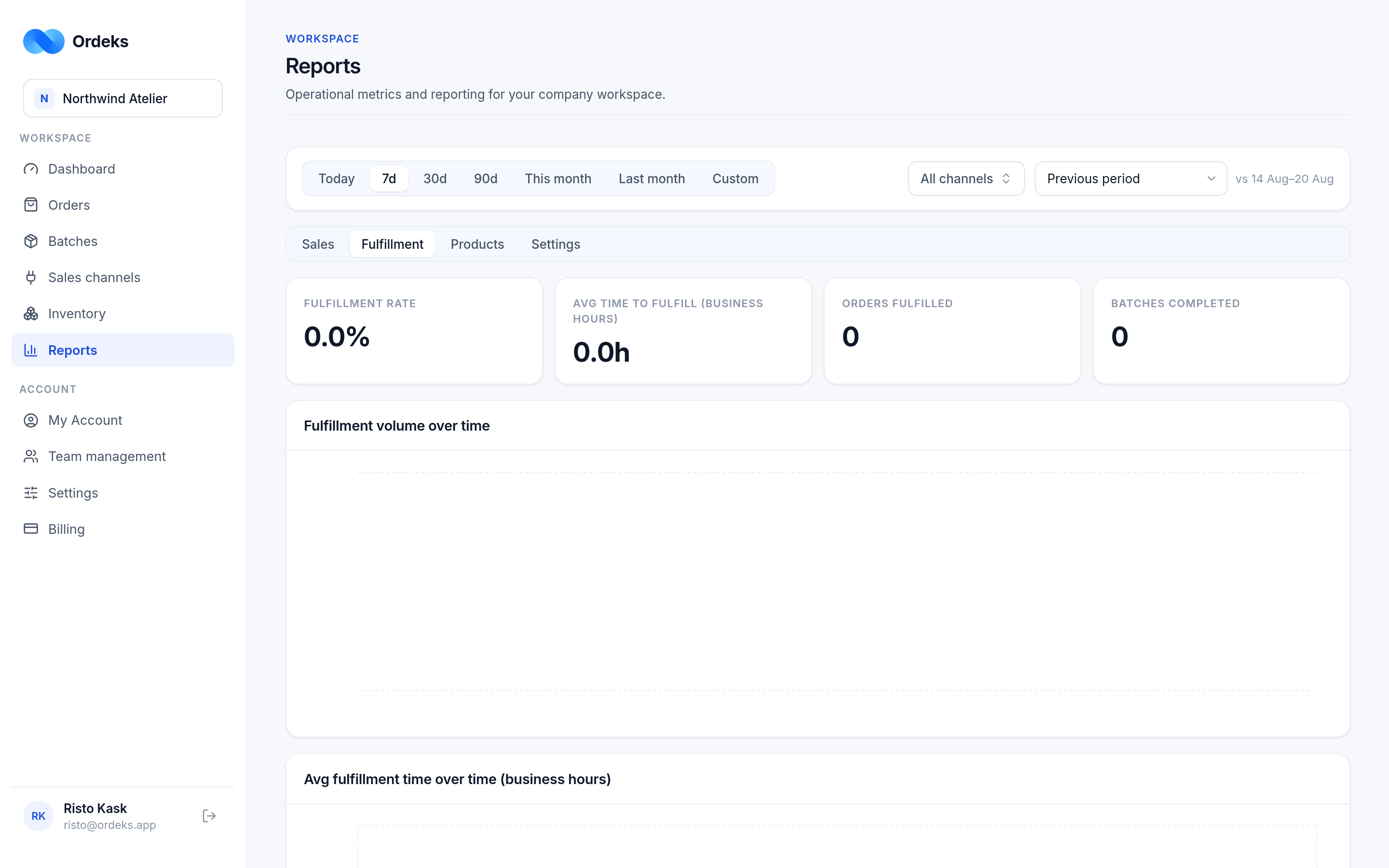
Sales, fulfilment and product reports with any date range and a comparison period. Fulfilment rate, average time to fulfil, throughput per team member, batch sizes over time. Measure fulfilment time in your working hours, so a Friday-evening order isn't recorded as taking three days.

The fulfilment report, showing fulfilment rate and average time to fulfil against a comparison period.

Built for the floor

  • Android and iOS, including Zebra handhelds
  • Works offline
  • English and Eesti, per person
  • Roles for owners, admins and workers
  • Push alerts for new orders, on a schedule you set
  • One account, several companies
  • Over-the-air updates — a fix reaches your handhelds the same day
  • GDPR request tooling built in

Pay for the seats and the channels you use

Start with a 14-day free trial. Then €9 per person per month plus a price per connected channel — monthly or annual, VAT excluded. Add a picker in December, remove them in January; the subscription follows.

€9
per person, per month
14 days
free trial, no card to start

Per connected channel

WooCommerce
€19 / month
Erply
€24 / month
Montonio
€9 / month

All prices exclude VAT. Every feature is included on every subscription.

Questions worth asking first

What if a product has no barcode?

The picker holds the product card and confirms "collect without scanning". It is recorded as counted-without-scanning and shows on the batch record, so you can see exactly where your barcode gaps are.

Do I have to map my warehouse?

No. Turn on learned routing and Ordeks builds the pick route from the order your team already collects products in, and refreshes it daily. If you do keep warehouse locations, it can sort by those instead.

What happens if the wifi drops mid-batch?

Scanning keeps working. Every pick, pack, hold, undo and completion is saved on the device and replayed in the exact order it happened when the connection returns. A banner shows how long you've been offline and how many actions are unsent, and it escalates from grey to amber to red. Nothing is counted twice: every fulfilment write is safe to replay.

How long does setup take?

Connecting a store is a wizard: paste your API keys, Ordeks tests the connection and sets up webhooks, you confirm the field mapping against a real order from your own store, and you choose how much history to import. Ten minutes to a working order list. Start with three months of history and import the rest later.

What if we stop paying?

Connections lock and syncing stops. Your data is not deleted. Add a payment method and everything resumes.

Where is our data, and can we handle a GDPR request?

Each company's records are scoped to that company, and channel credentials are stored encrypted. You can search a customer by email, see their orders, export their data, or permanently anonymise every order they appear on. Individual users can export or delete their own account, and an owner can close the company entirely.

Your next order could be scanned

Connect a store in ten minutes. Import three months of orders. Pick your first batch this afternoon.